
Flooring Systems · 5 min read · Updated 2026-07-07
Why Solvent-Free Epoxy Flooring Is Used in Industrial Facilities
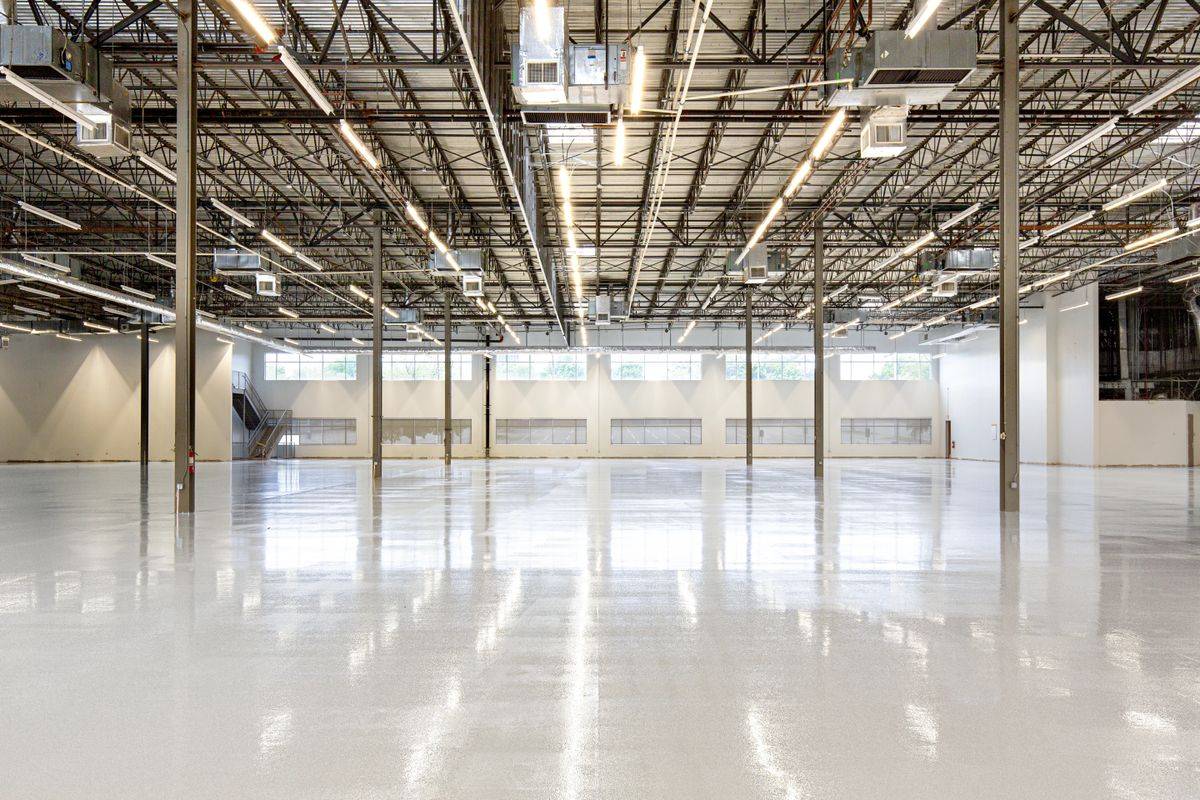
Answer summary
Solvent-free (100% solids) epoxy flooring cures without releasing solvent, so nearly everything applied stays on the floor as film build. Industrial facilities specify it for thick, seamless, chemical-resistant floors with low odour during application — typical examples are self-smoothing systems for production areas and roller-grade coatings for workshops.
What "solvent-free" actually means
Epoxy coatings come in three carrier types. Solvent-based products use solvent that evaporates during cure; water-based products disperse the resin in water; solvent-free (100% solids) products contain essentially no carrier at all — the resin and hardener react and everything applied remains as cured film.
That has two practical consequences: high film build per coat (self-smoothing systems are applied millimetres thick in one operation), and low odour and VOC release during application, which matters in enclosed industrial spaces and near food or occupied areas.
Why industrial facilities specify it
For thinner-build applications — sealing a workshop floor, coating a store — roller-grade solvent-free epoxies such as Sparcofloor #102 provide the same chemistry at lower film builds.
- High build in one application — self-smoothing systems such as Sparcofloor SL 200 are typically applied at 1.6–2.0 kg/m² as a seamless wearing layer
- Mechanical strength — the SL 200 TDS indicates compressive strength up to around 50 N/mm² when cured
- Chemical resistance — a continuous, non-porous film for spill and washdown zones
- Low odour during application — relevant for phased works in operating facilities
- Seamless, cleanable finish — no joints for contamination to sit in
Trade-offs to plan around
Solvent-free epoxies have a working-time constraint: with no solvent to slow the reaction, pot life is short — the SL 200 TDS indicates up to about 20 minutes at 28 °C — so mixing and application are planned batch by batch. Substrate requirements are also real: concrete moisture content and preparation quality drive adhesion, so damp slabs may point instead to a damp-tolerant water-based epoxy or a moisture-tolerant primer beneath the solvent-free body.
As with all resin floors, the right answer is a build-up matched to the substrate, traffic, chemical exposure and shutdown window — not a single product choice.
When to use this system
- Production areas needing a thick, seamless, chemical-resistant wearing layer
- Enclosed spaces where low odour during application matters
- Floors subject to heavy point loads and wheeled traffic
- Workshops and stores needing an economical sealed floor (roller grade)
Where it is commonly used
- Warehouses, storage areas and loading bays
- Pharmaceutical facilities and clean rooms
- Assembly halls, plant rooms and garages
- Chemical processing and containment floors
Related Sparco products
Recommended TDS downloads
Browse the TDS Download Centre →Related market segments
Manufacturing & Warehousing
Production floors and warehouses take forklift traffic, impact, spills and around-the-clock operations. Sparco's full flooring range — from bonding primers and repair mortars to self-smoothing epoxies and polyurethane topcoats — keeps industrial floors serviceable with minimal downtime.
Chemical Processing
Process areas, bund walls and storage zones demand floors that stand up to spills, cleaning regimes and mechanical wear. Sparco's solvent-free epoxy systems and polyurethane screeds provide medium-to-heavy chemical resistance with seamless, easy-to-clean finishes.
Related solutions & guides
Frequently asked questions
Is solvent-free epoxy the same as low-VOC epoxy?
Closely related: solvent-free (100% solids) products release little to no solvent during cure, so they are inherently low-VOC during application. Water-based epoxies are the other common low-odour option, trading film build for damp tolerance.
How thick is a solvent-free epoxy floor?
It depends on the system: roller-applied coatings build thin films, while self-smoothing systems are applied millimetres thick — Sparcofloor SL 200 is typically applied at around 1.6–2.0 kg/m² as a self-smoothing wearing layer.
Can solvent-free epoxy go on damp concrete?
Substrate moisture limits apply — the SL 200 TDS indicates a maximum concrete moisture content of around 5%. Damp slabs are usually handled with a damp-tolerant primer or a water-based epoxy system instead; confirm with the technical team.
Why choose solvent-free epoxy over solvent-based?
Solvent-free (100% solids) epoxy has very low odour and low VOC, can be applied at higher film builds in one coat, and is preferred for occupied buildings and enclosed areas. Solvent-based systems are thinner and mainly used as primers or where deeper penetration is wanted.
Does a solvent-free epoxy floor need a primer?
Most floors are primed so the system bonds reliably and to control pinholing from concrete outgassing; the primer choice depends on the substrate porosity and moisture. Our technical team confirms the primer with the build-up.
Related guides
6 min read
Epoxy vs Polyurethane Flooring: Which System Should You Use?
Read guide →
5 min read
PU Screed Flooring for Washdown and Heavy-Duty Areas
Read guide →
6 min read
How to Read a Technical Data Sheet for Floor Coatings
Read guide →
12 min read
Why Industrial Floor Coatings Fail: A Diagnostic Guide
Read guide →
7 min read
Epoxy flooring for warehouse buildings in Singapore: a system guide
Read guide →
Related project references
Anonymised references from real Sparco projects show how these systems are applied on comparable sites.
Browse project references →Values referenced in this guide come from the products' Technical Data Sheets. Final specification depends on substrate, traffic, chemical exposure and shutdown window — confirm the complete build-up with our technical team.